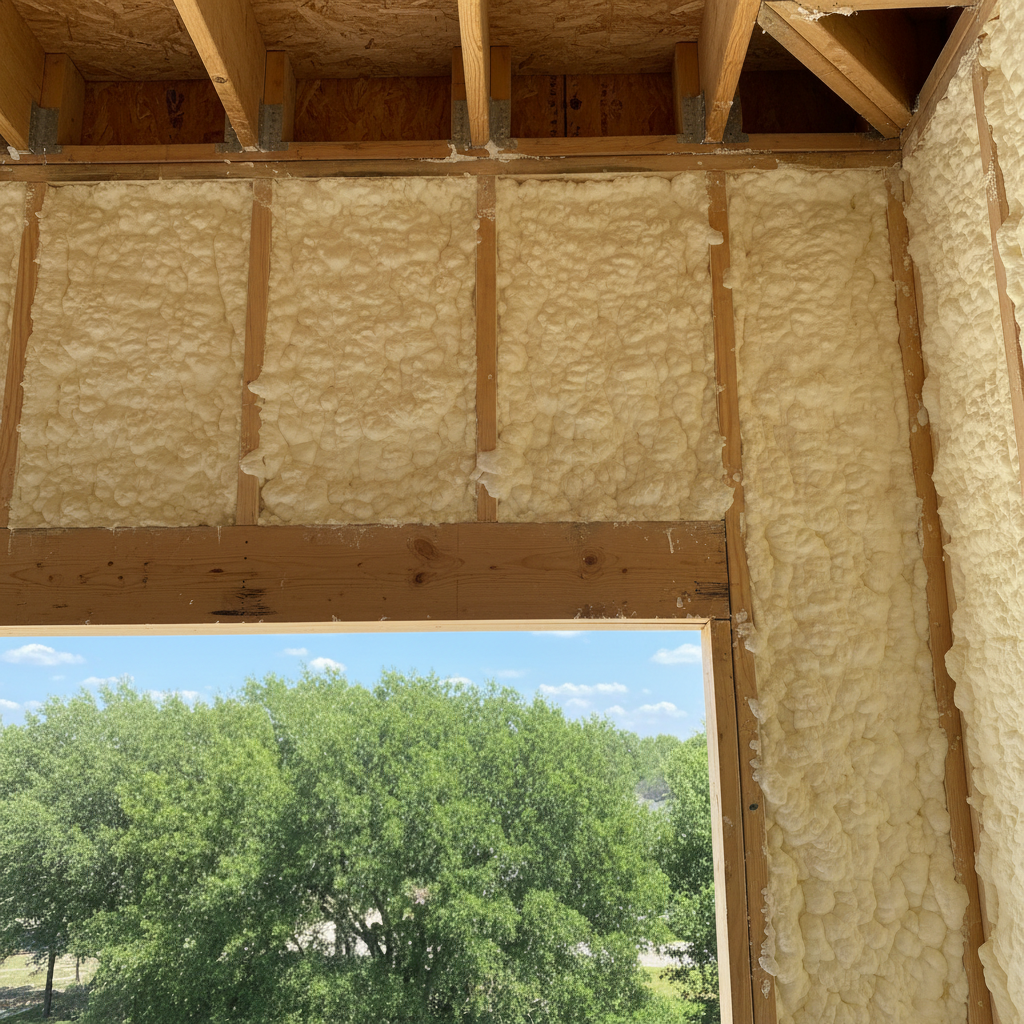
Alright, let's talk open-cell spray foam. I get a lot of questions about this stuff, and honestly, there's a lot of misinformation out there. As a local guy running Oasis Insulation, I've seen it all, and I'm here to give you the real deal, no marketing fluff. You've got questions, I've got answers. Let's get into it.
What exactly is open-cell spray foam, and how's it different from closed-cell?
Okay, so open-cell spray foam is a type of insulation that, once it cures, has tiny little cells that aren't completely closed off. Think of it like a sponge – it's soft, flexible, and lets air move through it a bit. It's usually less dense than closed-cell, expands a lot more during application, and is generally more affordable per board foot. Closed-cell, on the other hand, is super dense and rigid. Those cells are completely sealed off. It's like a solid plastic board once it's cured, and it creates a vapor barrier, which open-cell doesn't.
Where in my Grand Prairie home is open-cell spray foam best used?
For most homes here in Grand Prairie, open-cell is fantastic for areas where you want a really good air seal and thermal barrier. You just don't necessarily need a vapor barrier or structural reinforcement there. I'm talking about attics, especially in our hot Texas summers where heat gain through the roof deck is a huge problem. It's also great for wall cavities, crawl spaces (if you're encapsulating them), and even rim joists. Because it expands so much, it fills every little nook and cranny, which is key for stopping drafts and making your AC work a lot less.
Does open-cell spray foam really help with energy bills in our Texas heat?
You bet it does. This is one of the biggest reasons folks around here choose it. By creating such an effective air seal, open-cell foam stops conditioned air from escaping and unconditioned air from getting in. In Grand Prairie, where we see those brutal 100-degree days, your AC unit is constantly fighting to keep your house cool. With open-cell in your attic or walls, your HVAC system doesn't have to work nearly as hard. I've seen homeowners cut their cooling costs significantly. It's not just about the R-value; it's about stopping air movement.
Is open-cell foam a good sound barrier?
It absolutely is. Because of its softer, open-cell structure, it's excellent at absorbing sound. If you've got a noisy street, or you want to quiet down a media room, or even just reduce sound transfer between rooms, open-cell foam can make a noticeable difference. It's not just about temperature; it's about making your home a more peaceful place to live. Think about it – that spongy texture just soaks up vibrations and sound waves.
What about moisture and mold with open-cell foam?
This is where some people get confused. Open-cell foam is permeable to water vapor. That means if you have a roof leak, water can pass through it, and you'd likely see the leak or feel dampness. This is actually a good thing in some cases, because it allows you to detect and address the leak. Closed-cell, being a vapor barrier, would trap the water, potentially leading to hidden mold issues. However, open-cell itself doesn't promote mold growth. Mold needs a food source (like wood or drywall) and moisture. If you prevent moisture intrusion, you won't have a mold problem. Proper ventilation and addressing any leaks are still crucial, just like with any insulation.
How long does open-cell spray foam last?
When it's installed correctly, open-cell spray foam is a permanent solution. It doesn't settle, sag, or degrade over time like some other insulation types. It adheres to the surfaces it's sprayed on and stays put for the life of your home. You're not going to be replacing this stuff in 10 or 20 years. It's a one-and-done kind of deal, which is a big part of its value.
Can I install open-cell spray foam myself?
Look, I'm all for DIY projects, but spray foam isn't one I'd recommend for the average homeowner, especially not open-cell. It requires specialized equipment, proper safety gear (we're talking respirators, full body suits, eye protection), and a lot of training to get the mix ratios and application technique just right. If it's not applied correctly, you won't get the R-value, you could have off-gassing issues, or you might end up with a mess that's expensive to fix. It's a job best left to the pros who do it every day, like us at Oasis Insulation. We've got the experience to make sure it's done right the first time.