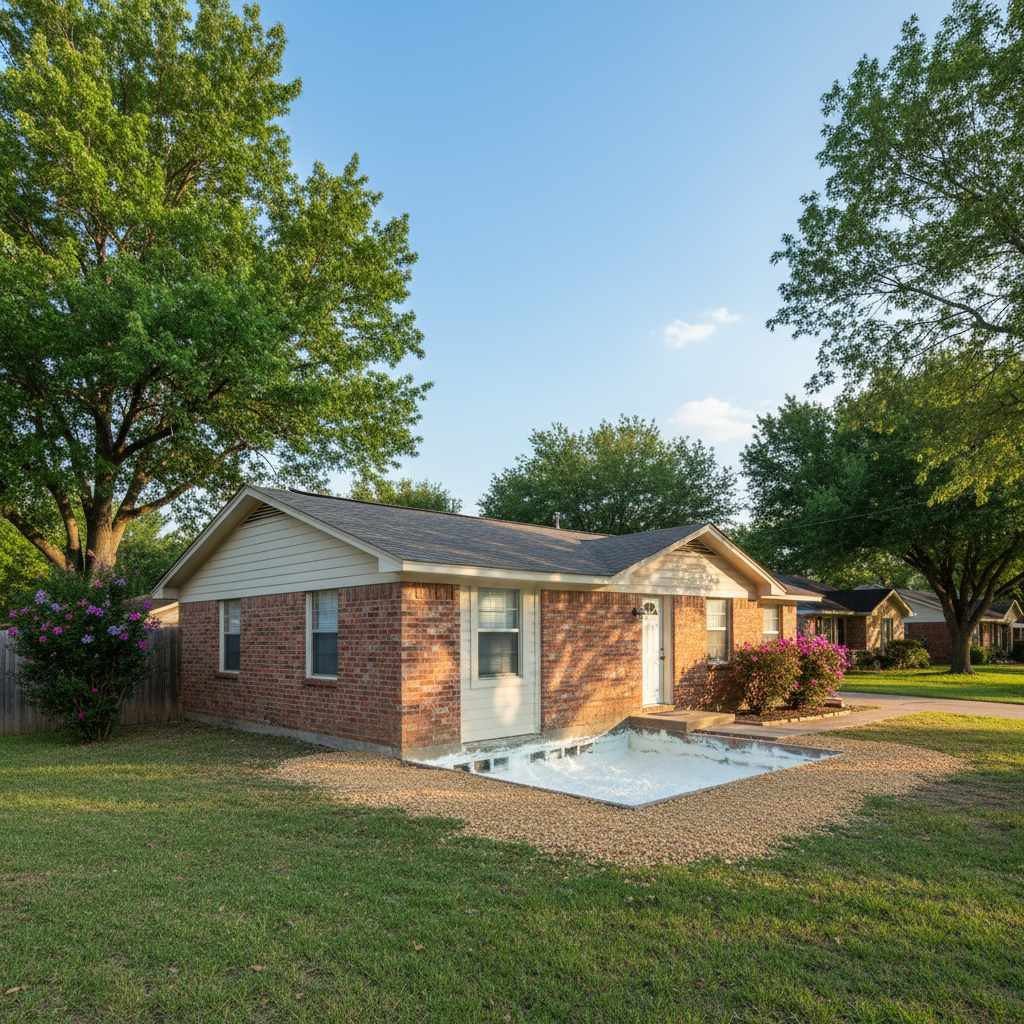
Ever felt cold spots on your floors? Or maybe you've noticed your HVAC system just running non-stop, especially when it's scorching outside or we get one of those surprise cold snaps. If your Grand Prairie home has a crawl space, there's a good chance that uninsulated—or poorly insulated—area underneath your house is a big part of the problem. It happens more often than you'd think.
A lot of folks assume crawl spaces are just for pipes and wiring, out of sight, out of mind. But down here in North Texas, with our crazy temperature swings and that clay soil that holds onto moisture, what's happening under your house directly impacts what's happening inside it. It's not just about comfort; it's about protecting your biggest investment, your home.
Why Your Grand Prairie Crawl Space Matters More Than You Think
You might have seen older homes, especially in areas like Dalworth Park or around the older parts of town, that have those vented crawl spaces. The idea was to let air circulate, prevent moisture buildup. Sounds good on paper, right? But what actually happens is you're letting hot, humid summer air right under your house, or freezing cold winter air. That air then gets into your floorboards, your ductwork, and eventually, your living space. Your AC or furnace has to work overtime to fight it off, and that costs you money, plain and simple.
Think about it: if your floors are cold in winter, that's heat escaping. If they're warm and clammy in summer, that's heat and humidity coming in. It's like leaving a window open all year round, but worse, because it's happening underneath you, out of sight. What a pain!
The Right Way to Insulate a Crawl Space Here
So, what's the solution? For most homes around here, especially with our climate, we're looking at two main approaches for crawl space insulation:
- Encapsulation with Insulation: This is often considered the best option. We completely seal off the crawl space from the outside world. That means putting down a heavy-duty vapor barrier on the ground, sealing off any vents, and then insulating the walls of the crawl space itself. This turns that damp, drafty space into a conditioned, or semi-conditioned, area. It keeps the outside air out, controls moisture, and makes your floors feel a whole lot better.
- Insulating the Floor Joists: If full encapsulation isn't in the cards for whatever reason, insulating the floor joists (the underside of your subfloor) is the next best thing. We're talking about installing batts or rigid foam boards between those joists. The key here is making sure it's installed perfectly, with no gaps, and often with a vapor barrier on the warm side to prevent moisture issues.
Now, you might be thinking,